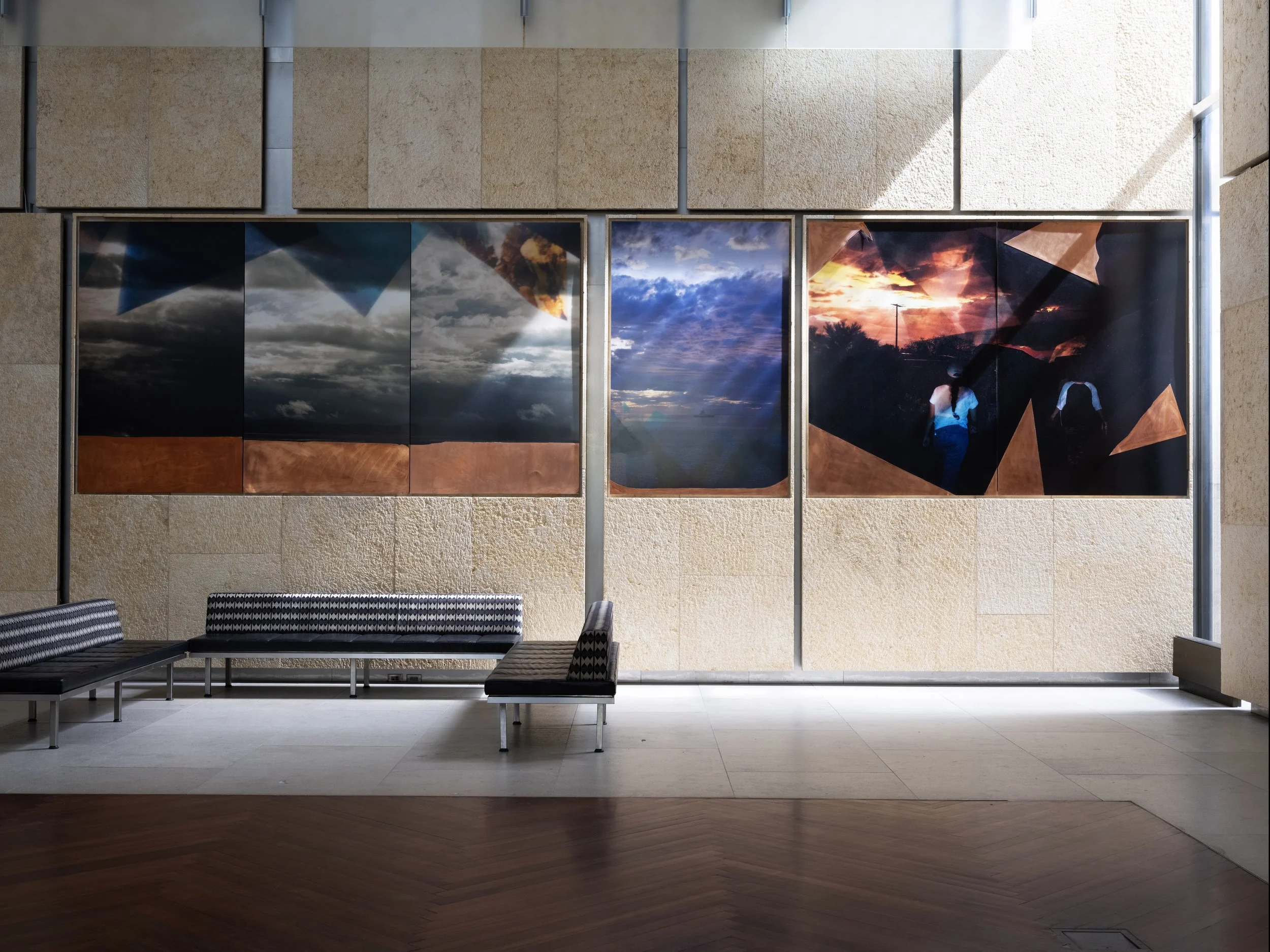
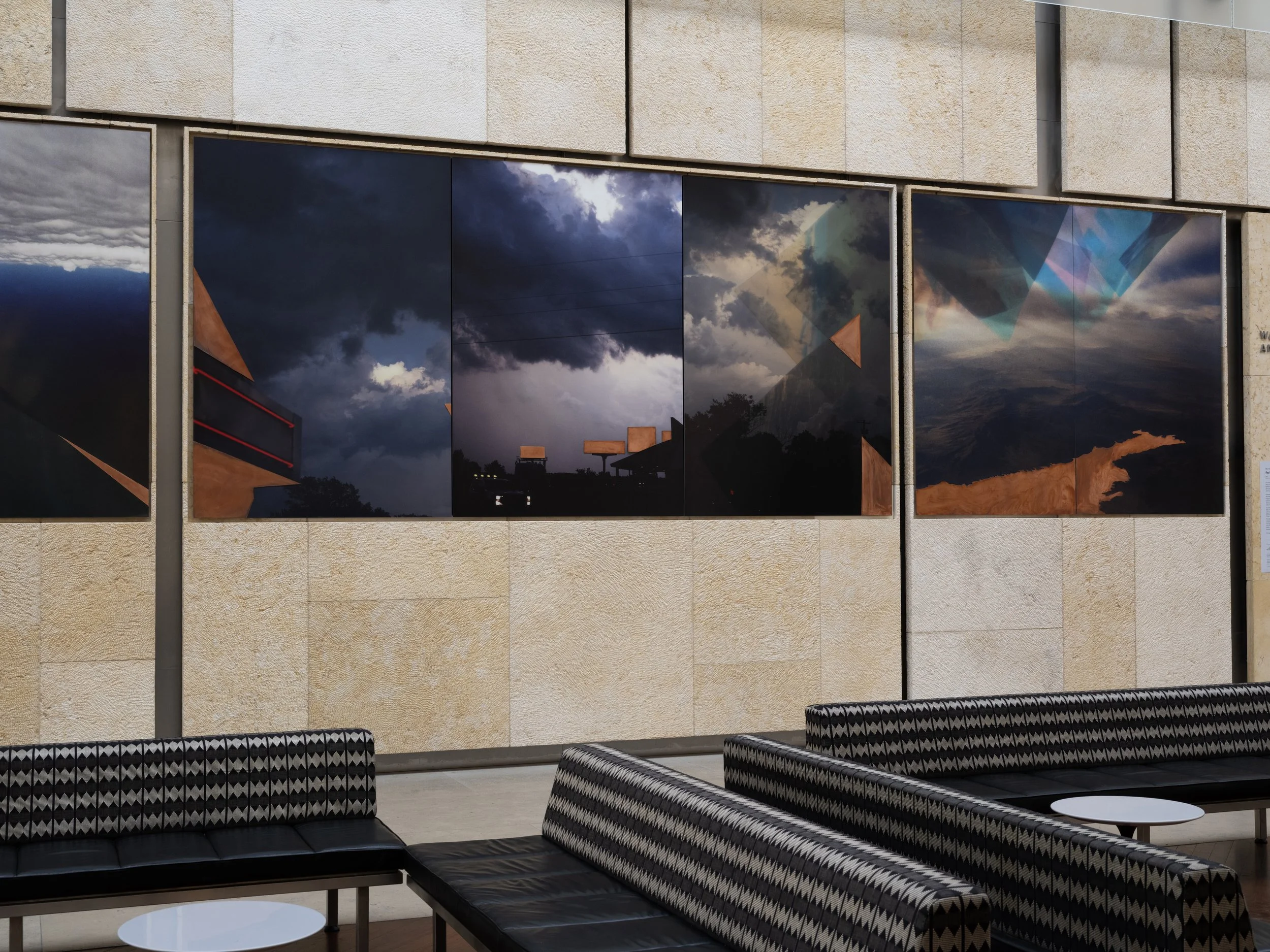
Red Metal Dust is a cycle of eleven plates commissioned by the Barnes Foundation for the Annenberg Court, a body of work that considers landscape as a site of emanation, shaped as much by what remains as by what has been removed. Each work stands just over 7 feet high, ranging in width from under 5 feet to over 17 feet. The photographs were taken over the course of a year on medium format and 35mm cameras, in Washington, California, Wisconsin, Oklahoma, and points across the Midwest, from road trips, from trains, from planes. They are not a survey of the continent, they are places that stood out, places remembered for one reason or another, offered as memory without claiming ownership of a location. Over each foundational image are transparencies bearing photographs of concurrent landscapes, cut up, rearranged, rephotographed, and overlaid, so that images pass through and across one another rather than settle into a single view. The color is corrected toward how I remember these places rather than how they are or were.
The title comes from the Ho-Chunk word for copper, mą́s šúc, or Red Metal. The works themselves I call plates. Before photography became reproducible, every photograph was a plate, a singular image fixed to a sheet of copper, and each of these is a singular object, built on a photograph but unrepeatable. In certain Ho-Chunk stories dust is what gives life, accumulated and collected, and copper is a living thing, descended from the other metals that are part of life on this earth. That belief carries a question with it, one I found framed in Elizabeth Povinelli's writing: who gets to decide what is living and what is non-living, and what powers and hierarchies are built around that determination? Living, the copper here was left untreated. It carries the fingerprints of the people who cut and framed it, and over the ten months of the installation it will keep oxidizing, responding to the breath, the voices, and the presence of everyone who passes through the room. It is a sensitive metal, impossible to make clean and perfect, and that is part of its beauty. It is less a surface than a witness, resilient and reflective, shaped through contact rather than display.
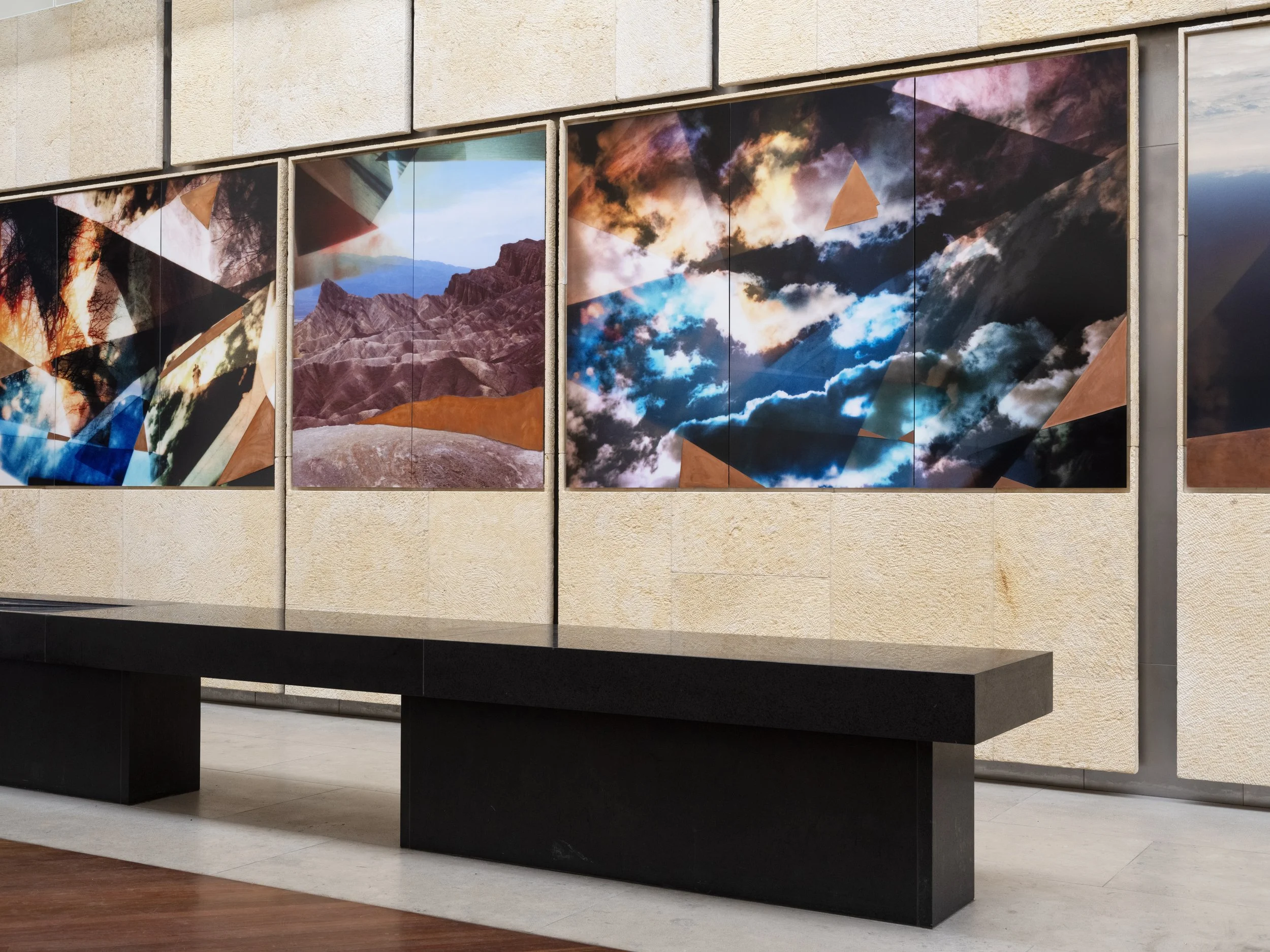
The copper forms are cut as silhouettes, following the contours of the transparencies and the landscapes beneath them, covering parts of the image as much as marking them. They are in conversation with two silhouettes of Ho-Chunk people made by Auguste Edouart in the 1840s, held in the collection of The Metropolitan Museum of Art. There is something in responding to what an image withholds and the shape of a body in silhouettes, in what gets photographed, and in how an outline can evoke an identity without offering it up to be observed. These are portraits of moments rather than portraits of people. In place of the written text I have etched onto the surface of photographs in previous work, the copper is asked to be a language of its own, an extension of the idea behind an earlier series, The Land Describes Itself.
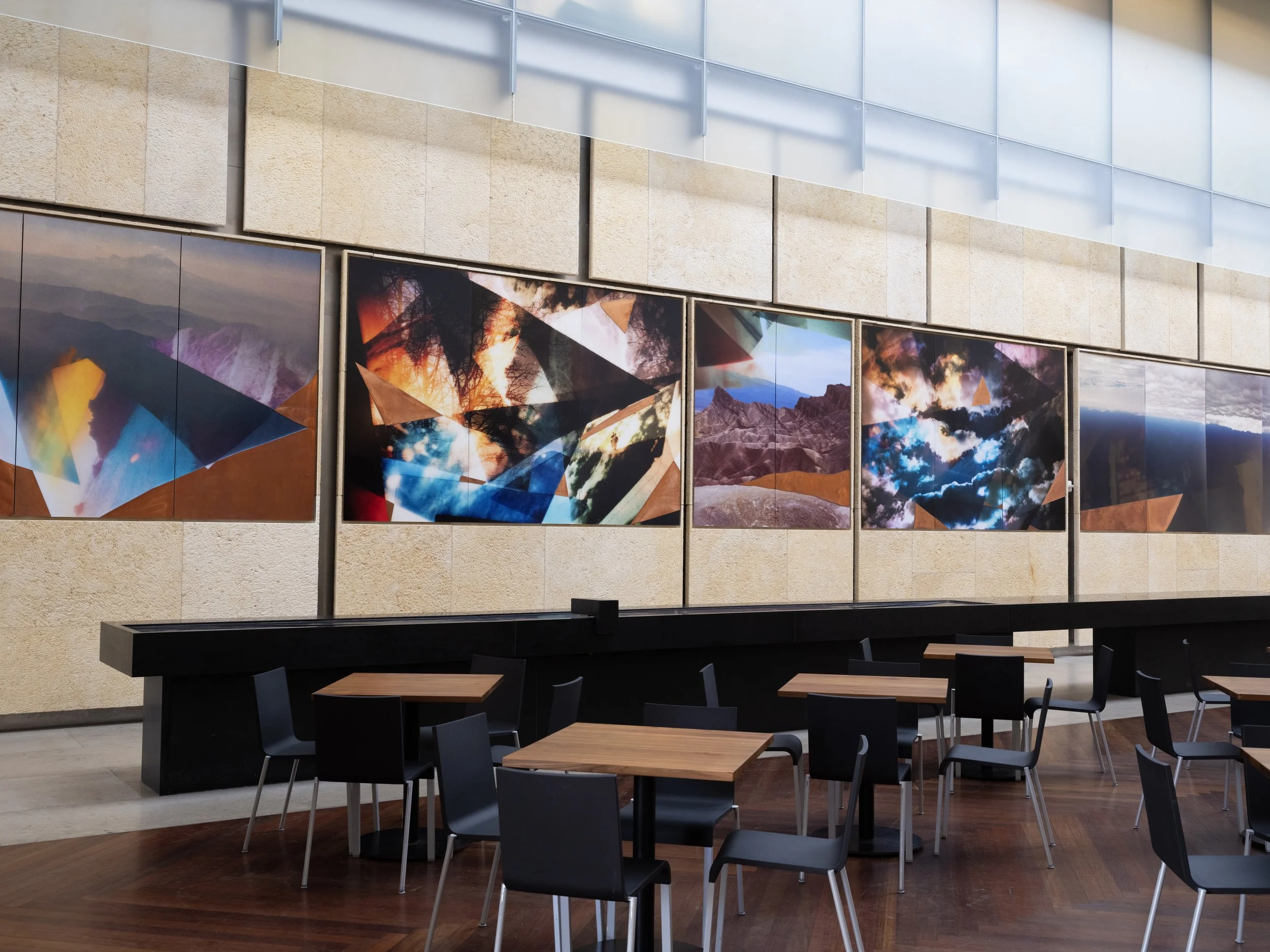
The commission coincides with the 250th anniversary of the United States, and 250 years is a small structure for the history of this land and the peoples who have lived on it. This landscape is older than America. These peoples are older than America. Copper has been carried and worked by Native communities across this continent for thousands of years. The anniversary became an invitation to expand the frame, to think about the scale of time on this continent and where we are going. Across these works, landscape is approached as a layered field of return, where images echo and settle into one another over time, accumulating the exhalations of breath and voice.